
Cabinet hardware is the smallest decision in most kitchen remodels—and one of the loudest. You can spend weeks choosing cabinet colors, debating countertop materials, and aligning the layout to fit your lifestyle. Then, at the end, you pick a knob because it’s “fine,” or a pull because it’s on sale, or a finish because it matches the faucet. The kitchen gets installed, the photos look good, and then you live with it. The drawers feel awkward to open. The pulls look slightly off in the light. The spacing isn’t consistent. Suddenly the kitchen doesn’t feel as polished as it should, even though everything is new.
This is what we call the cabinet hardware trap: the moment tiny choices quietly downgrade the entire room. Hardware is the part you touch constantly. It sits at eye level. It creates rhythm across the kitchen. It’s a visual punctuation mark on every door and drawer. When it’s right, the kitchen feels tailored. When it’s wrong, the kitchen feels like a budget compromise—often without anyone being able to explain why.
If you’re searching for a cabinet company in Walton, KY, this is the kind of detail that separates a kitchen that looks expensive from a kitchen that looks “almost.” At Redwood Cabinets of Cincinnati, we’ve seen homeowners invest in strong cabinetry and still lose that high-end feeling because hardware choices were rushed, mismatched, or installed without precision. The good news is that hardware is also one of the easiest things to get right—when you know what matters.
Here’s how tiny hardware decisions can make a kitchen feel cheap, and what to do instead.
Why Hardware Has an Outsized Impact
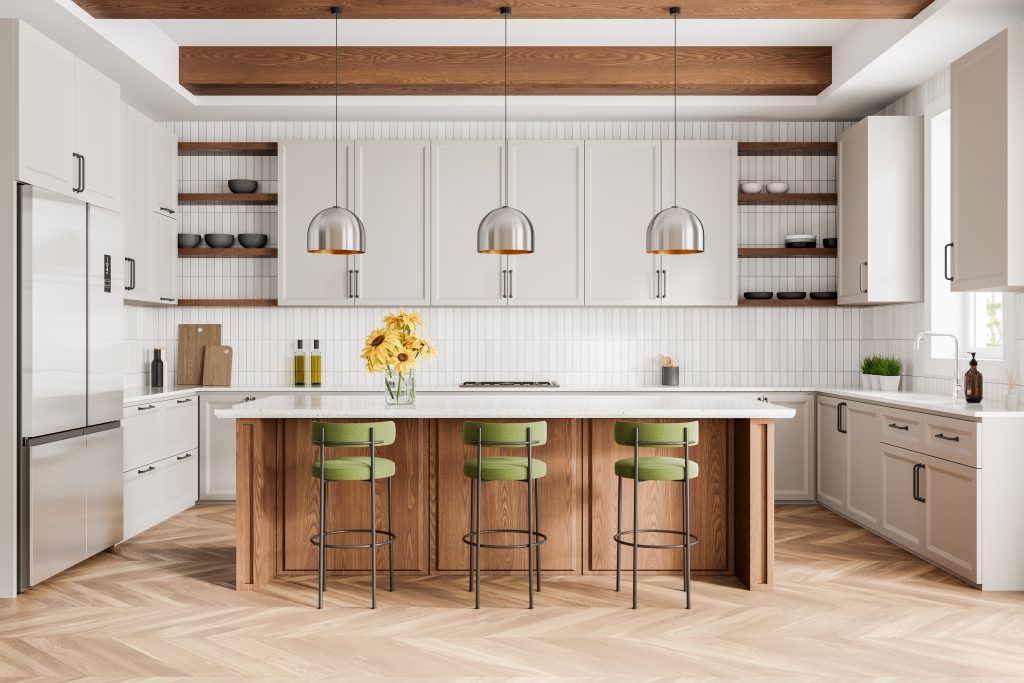
Hardware is the only part of cabinetry designed to be touched thousands of times. A cabinet door can be beautiful, but you don’t interact with the paint—you interact with the pull. A drawer can be built well, but the first thing you feel is the grip and the placement of the handle. Hardware is where the kitchen becomes physical. It’s also where the kitchen becomes visually repetitive—because hardware is repeated across the entire room.
That repetition is why hardware affects perceived quality so strongly. When every pull is aligned, proportional, and consistent, the kitchen reads as intentional. When spacing is random, finishes clash, or proportions are off, the kitchen reads as rushed. Not necessarily “bad,” but not refined.
Homeowners who hire a cabinet company in Walton, KY often focus on cabinet boxes and door style, assuming hardware is a small finishing touch. In reality, hardware is the finishing system. At Redwood Cabinets of Cincinnati, we treat hardware selection as part design and part ergonomics—because it changes both how the kitchen looks and how it feels to use.
The Most Common Trap: Choosing Hardware That’s Too Small
Tiny knobs and short pulls can look charming in a showroom. In real life, they can make a kitchen feel underbuilt. Why? Because small hardware forces your hand onto the cabinet face. That creates fingerprints, smudges, and wear around edges. It also makes drawers harder to open, especially when they’re heavy with pots, pans, or dishware.
Undersized pulls are one of the fastest ways to make cabinetry feel “cheap,” even if the cabinets are not cheap. The kitchen starts to feel like it was designed for the photo, not for the person using it.
If you’re working with a cabinet company in Walton, KY, the right hardware size should match the scale of the cabinetry and the weight of the drawers. Wider drawers usually deserve longer pulls. Heavy drawers deserve hardware that provides leverage. At Redwood Cabinets of Cincinnati, we often see a kitchen’s quality perception jump immediately when hardware is scaled correctly. It’s subtle, but it’s powerful.
Finish Mismatch: When “Matching the Faucet” Isn’t Enough
The most common hardware logic is simple: match the faucet, match the lighting, match the appliances. Sometimes that works. But kitchens are not a single-metal room anymore. Most kitchens use multiple metal tones naturally: stainless appliances, a faucet finish, light fixtures, and sometimes a range hood or shelving detail.
If you choose cabinet hardware solely to match one element, it can clash with the rest. A warm brass pull can look stunning, but if the kitchen is mostly cool-toned stainless and chrome, the brass can feel isolated. Matte black can look modern, but if there are no other black anchors, it can feel like a random accent rather than a design choice.
This is why a professional cabinet company in Walton, KY will talk about balance, not only matching. At Redwood Cabinets of Cincinnati, we often recommend choosing hardware that either bridges tones (like softer brushed finishes) or intentionally repeats an accent already present in the room. Hardware should feel integrated, not like it was picked from a separate mood board.
The Cheap-Looking Tell: Inconsistent Placement
Nothing makes a new kitchen look sloppy faster than inconsistent hardware placement. One handle is slightly higher than the next. Drawer pulls drift off-center. Upper cabinet knobs sit at different heights across the run. These are millimeter-level mistakes that your brain notices instantly.
This is why hardware installation is as important as hardware selection. Even high-quality pulls look cheap when installed inconsistently. It creates visual noise. It makes the kitchen feel like it was assembled rather than crafted.
If you’re hiring a cabinet company in Walton, KY, ask how they ensure consistent placement. Templates, careful measurements, and professional drilling practices matter. At Redwood Cabinets of Cincinnati, we treat hardware placement like typography: spacing and alignment create a sense of luxury. Misalignment creates a sense of chaos.

The Shape Problem: When Hardware Feels Wrong in Your Hand
Hardware isn’t only visual. It’s tactile. Some pulls look great but feel sharp. Some knobs look elegant but are slippery. Some shapes catch clothing pockets or bruise hips on islands. A kitchen can feel cheap when the hardware feels inconvenient, because inconvenience reads as poor planning.
The right hardware feels natural. You shouldn’t think about it. You should simply use it. That’s why homeowners should test hardware in their hand before committing.
A good cabinet company in Walton, KY will encourage that. At Redwood Cabinets of Cincinnati, we often recommend choosing hardware based on grip comfort first, then choosing the finish that fits the style. Kitchens are working rooms. Hardware should support the work, not create tiny daily frustrations.
Over-Trend Hardware: The Decision That Ages Fast
Trends are not inherently bad. But some hardware trends age faster than cabinetry itself, and that can make a new kitchen feel dated quickly. Extremely ornate pulls, highly specific novelty shapes, or ultra-shiny finishes can look dramatic now and feel out of place later—especially if the rest of the kitchen is more timeless.
If your cabinets are designed to last, hardware should support that longevity. This doesn’t mean choosing boring pieces. It means choosing shapes and finishes that won’t look like a timestamp in two years.
When homeowners choose a cabinet company in Walton, KY, they’re often thinking long-term. At Redwood Cabinets of Cincinnati, we help homeowners avoid hardware that feels like a short-lived fashion choice unless they genuinely want that “statement” and understand what it means for resale and future updates.
Mixing Knobs and Pulls the Wrong Way
Mixing knobs and pulls can look great—or it can look chaotic. The difference is logic. A kitchen feels cheap when knobs and pulls are mixed randomly, without a consistent rule. For example: knobs on some drawers and pulls on others without a reason. Or a different style of knob on upper cabinets than the pull style on lowers.
A well-designed mix has a system, such as knobs on doors and pulls on drawers, or pulls everywhere for a modern look. The goal is visual consistency and functional sense.
A professional cabinet company in Walton, KY should guide this choice. At Redwood Cabinets of Cincinnati, we recommend a simple rule that fits the kitchen’s style and keeps the room looking cohesive.
Quality Matters: Lightweight Hardware Can Betray a Good Kitchen
Even if hardware looks good, cheap hardware often feels cheap. Lightweight metal, rough edges, inconsistent finishes, and poor coatings show wear quickly—especially in high-touch areas. The finish can rub off. The metal can pit. The screws can loosen. And once hardware starts failing, the kitchen starts feeling tired.
If you’re investing in a remodel with a cabinet company in Walton, KY, hardware is not the place to cut corners. It’s one of the cheapest upgrades relative to the total project cost, and it has one of the biggest daily impacts.
At Redwood Cabinets of Cincinnati, we often see homeowners upgrade hardware later because they realize the original choice didn’t hold up. Choosing quality from the start saves that frustration.

The Simple Way to Avoid the Hardware Trap
The best hardware decisions are not complicated. They are just intentional.
Scale hardware to the size and weight of drawers and doors.
Choose a finish that complements the whole kitchen, not just one element.
Use consistent placement with professional templates and drilling.
Pick shapes that feel good in your hand and don’t create daily friction.
Avoid ultra-specific trends unless you love them enough to replace them later.
Invest in hardware quality that matches the cabinetry investment.
If you want the kitchen to feel refined, hardware needs to support that refinement. If you want it to feel expensive, hardware needs to be consistent, comfortable, and well-installed.
That’s why working with Redwood Cabinets of Cincinnati matters. A strong cabinet company in Walton, KY doesn’t treat hardware as an afterthought. It treats it as the detail that finishes the story. Because the difference between a kitchen that looks new and a kitchen that feels high-end is rarely one big decision. It’s the small decisions repeated across the room—made carefully, installed precisely, and designed for real life.