
Nothing makes a kitchen look “almost right” faster than appliances that don’t sit naturally in the layout. A refrigerator that sticks out like it’s waiting to be pushed in. A range that’s framed by odd, skinny fillers. A dishwasher that looks cramped on one side and wide open on the other. Cabinets can be brand new, the finishes can be beautiful, and the lighting can be perfect—yet the kitchen still feels slightly improvised. That feeling usually comes from gaps and clearances that weren’t planned with enough precision.
Appliances are unforgiving. They don’t flex. They don’t “make it work.” They come with exact dimensions, ventilation requirements, door swing rules, and clearance needs that must be respected. That’s why homeowners who invest in custom cabinets in Walton, KY often do so for a very practical reason: they want cabinetry that fits the real appliances they own—and looks like it was built for them, not forced around them.
At Redwood Cabinets of Cincinnati, we’ve seen the entire spectrum: kitchens where appliances were an afterthought and the cabinetry had to be patched to fit, and kitchens where appliance planning was integrated from day one and the result felt calm, intentional, and truly finished. This article explains how to prevent the most common appliance-related cabinet mistakes and how to plan custom cabinets in Walton, KY so your kitchen looks cohesive and functions smoothly.
Why Appliance Gaps Happen More Often Than People Expect
Most appliance gaps start with one assumption: “standard size.” Homeowners often believe a 30-inch range is always exactly 30 inches, or that a “counter-depth” fridge will sit flush. In reality, appliance sizing is full of small variables that matter a lot once you’re working in tight tolerances.
A range may have a nominal width but require side clearance for safe operation. A refrigerator may be labeled counter-depth yet still protrude because of door thickness, hinge geometry, or handle depth. A dishwasher might be “standard” but still need extra space for hoses, electrical, or flooring thickness. Even wall ovens and microwave drawers have cutout requirements that must be respected to the millimeter.
When cabinetry is designed without exact model specifications, builders rely on allowances—and allowances often become gaps. That’s why the smartest way to avoid awkward clearances is to plan around the exact appliances you intend to use.
If you’re considering custom cabinets in Walton, KY, you’re already leaning toward the best solution: cabinetry that is built with your kitchen’s realities in mind. At Redwood Cabinets of Cincinnati, we treat appliance specs as the foundation of the cabinet plan, not as a detail to “figure out later.”
Start With Model Numbers, Not Photos
The first real step toward preventing gaps is boring but powerful: collect appliance model numbers early. Not just brand names. Not “30-inch range.” The actual model numbers and spec sheets.
Those spec sheets tell you what matters: overall width, installation width, door swing, required clearances, ventilation needs, and cutout dimensions. Many homeowners choose cabinet finishes and door styles first, then pick appliances later. That approach often forces compromises. The kitchen becomes a beautiful cabinet layout that must be adjusted to accommodate appliances that don’t quite fit.
With custom cabinets in Walton, KY, you have the opportunity to reverse the order and avoid the stress: choose appliances early, then build cabinetry around them. At Redwood Cabinets of Cincinnati, we guide homeowners through this because it prevents the most expensive kind of mistake—having to reorder or modify cabinetry after it’s built.
The Refrigerator Trap: Flush Looks Are About More Than Depth
The refrigerator is the biggest visual anchor in many kitchens, and it’s also the most common source of “why does this look weird?” A fridge can look wrong even if it technically fits. The issue is usually depth and door clearance.
Many counter-depth fridges still protrude several inches because the box may be shallower, but the doors, hinges, and handles add depth. Additionally, a refrigerator needs space for air circulation and for doors to open without hitting walls, cabinets, or islands. If the fridge is placed too tight, the doors won’t open fully, drawers won’t slide out, and the kitchen becomes frustrating to use.
For homeowners choosing custom cabinets in Walton, KY, the solution often involves planning a refrigerator enclosure correctly: using panels to create an integrated look, ensuring proper ventilation, and building with realistic depth expectations. It also means leaving the right clearance so the doors can open wide enough to access interior drawers.
At Redwood Cabinets of Cincinnati, we plan refrigerator areas with both function and appearance in mind. The goal is a fridge that feels like part of the kitchen, not an oversized appliance parked next to a cabinet run.
Ranges and Cooktops: Small Gaps Become Big Visual Problems
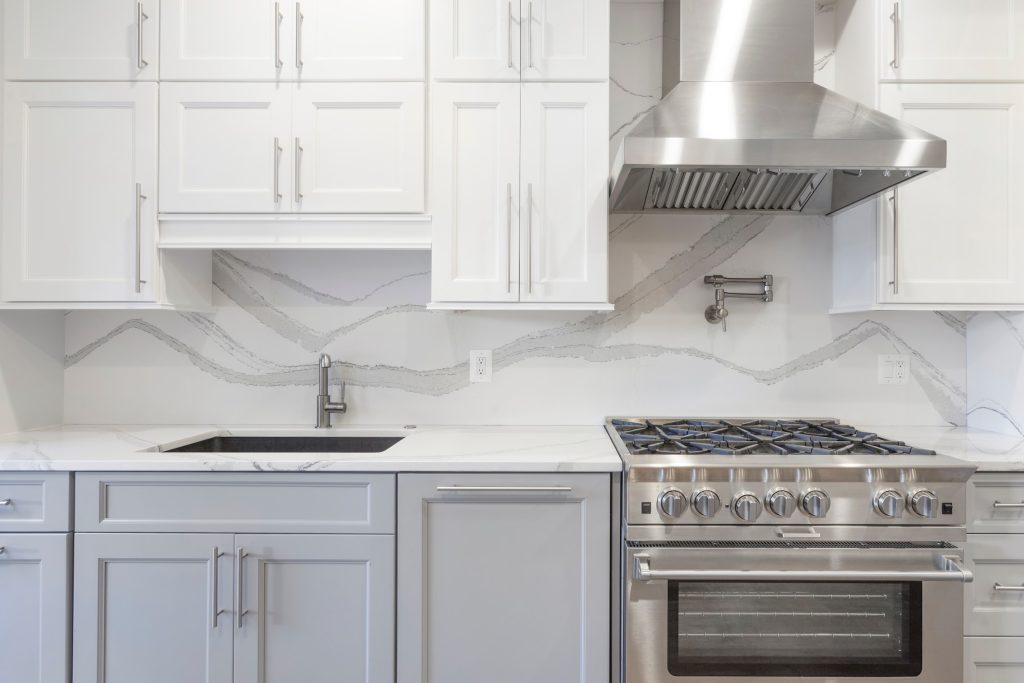
Ranges and cooktops are another place where gaps show up fast. A range that’s slightly narrower than the opening creates side gaps. A range that’s slightly wider creates stress and can damage surrounding cabinetry. Even when the fit is technically acceptable, inconsistent spacing can make the entire cooking zone look cheap.
If you’re investing in custom cabinets in Walton, KY, range planning should include more than width. You need to consider side clearances, heat exposure near cabinet faces, and how the backsplash and hood align with the range centerline. The cooking zone is one of the most photographed and visually “read” areas in a kitchen. If it looks off-center or patched with odd fillers, the whole kitchen feels less polished.
At Redwood Cabinets of Cincinnati, we align the cooking zone like a focal point: cabinetry, range, hood, and surrounding storage should read as one composed unit. That’s what prevents the “awkward gap” look that can haunt a new remodel.

Dishwashers: Where Floor Thickness and Panels Cause Surprises
Dishwashers create a specific kind of clearance problem: they rely on the cabinet opening height and the floor thickness. If the floor is replaced after the dishwasher is installed, the appliance can become trapped. If the cabinet opening isn’t sized correctly, the dishwasher can sit too low, too high, or misaligned with adjacent cabinet faces.
Another issue is panel-ready dishwashers. They look beautiful when done correctly, but they require precise planning. The panel thickness, handle style, and alignment with adjacent doors must be coordinated so the dishwasher doesn’t look like it’s wearing a different outfit than the rest of the kitchen.
Homeowners choosing custom cabinets in Walton, KY often want a cleaner look, and a properly planned dishwasher area is a huge part of that. At Redwood Cabinets of Cincinnati, we plan dishwasher clearances with flooring sequence, countertop templating, and panel alignment in mind so the dishwasher looks integrated and functions smoothly.
Wall Ovens and Microwave Drawers: Precision Cutouts Are Non-Negotiable
Built-in wall ovens and microwave drawers look sleek, but they operate on strict requirements. Cutouts must be exact. Ventilation must be respected. Electrical placement must align correctly so it doesn’t interfere with cabinet structure. If any part of that goes wrong, you either get visible gaps or an appliance that can’t be installed safely.
For custom cabinets in Walton, KY, these built-in appliance zones are where custom cabinetry can truly shine—because you can create clean, built-in lines instead of awkward filler strips. But that only works if your cabinet team is working from real specs and planning the surrounding storage with precision.
At Redwood Cabinets of Cincinnati, we treat built-in appliances as engineering points. When done right, they make a kitchen feel high-end. When done wrong, they become permanent reminders of rushed planning.
The Role of Panels and Fillers: Making “Necessary” Look Intentional
Even in the best kitchens, fillers and panels exist. The difference between high-end and cheap-looking is whether those pieces look planned or accidental.
Fillers are often needed to allow door swings near walls, to create space for appliance clearance, or to keep cabinet runs properly aligned. Panels are used to finish exposed cabinet sides and create a built-in look. When fillers are too skinny, mismatched, or randomly placed, they scream “we had to patch it.” When panels and fillers are balanced and integrated, they disappear into the design.
This is one of the biggest advantages of custom cabinets in Walton, KY: you can tailor filler widths and panel strategies so the kitchen looks composed. At Redwood Cabinets of Cincinnati, we plan these elements early so they support appliance fit and improve visual balance at the same time.
Why Installation Quality Determines Whether Your Plan Actually Works
Even the best cabinet plan can be ruined by sloppy installation. If cabinets aren’t level, appliances won’t sit correctly. If cabinet openings aren’t square, built-ins may have uneven gaps. If panels aren’t installed cleanly, the “integrated” look falls apart.
This is why homeowners should evaluate not just the cabinetry design, but who is installing it. A kitchen becomes “high-end” when every line is straight and every reveal is consistent. Appliances should look centered, aligned, and intentional.
At Redwood Cabinets of Cincinnati, installation is treated as part of the design, not a separate phase. That’s how you protect your investment and ensure your custom cabinets in Walton, KY look as good installed as they did on the plan.

The Practical Formula for Preventing Gaps and Awkward Clearances
If you want a kitchen that looks finished—truly finished—use this approach:
Choose appliances early and collect spec sheets.
Design cabinets around those exact dimensions, not assumptions.
Plan refrigerator areas with door swing, ventilation, and panel depth in mind.
Treat cooking zones as focal points and align them visually.
Account for flooring thickness and sequencing before sizing openings.
Use fillers and panels intentionally so necessary space looks deliberate.
Install with precision so the plan translates into reality.
This is the process that keeps kitchens from looking patched together. It’s what turns “new cabinets” into a cohesive system.
When homeowners choose custom cabinets in Walton, KY, they’re usually trying to avoid regret. They want a kitchen that feels tailored, not generic. Appliances are a huge part of that feeling because they’re the most rigid elements in the room. When cabinetry is planned around them with care, the kitchen looks calm, functions smoothly, and stays visually balanced.
That’s what Redwood Cabinets of Cincinnati focuses on: making the details disappear. Because the best kitchens are the ones where nothing looks like a workaround. Everything looks like it belongs. And that is exactly what great custom cabinetry around appliances should deliver.